- Jiaxin Road, Economic Development Zone, Jining City, Shandong Province, China
- jimmy@xtechmech.com

Contact Now!
+8617865500580
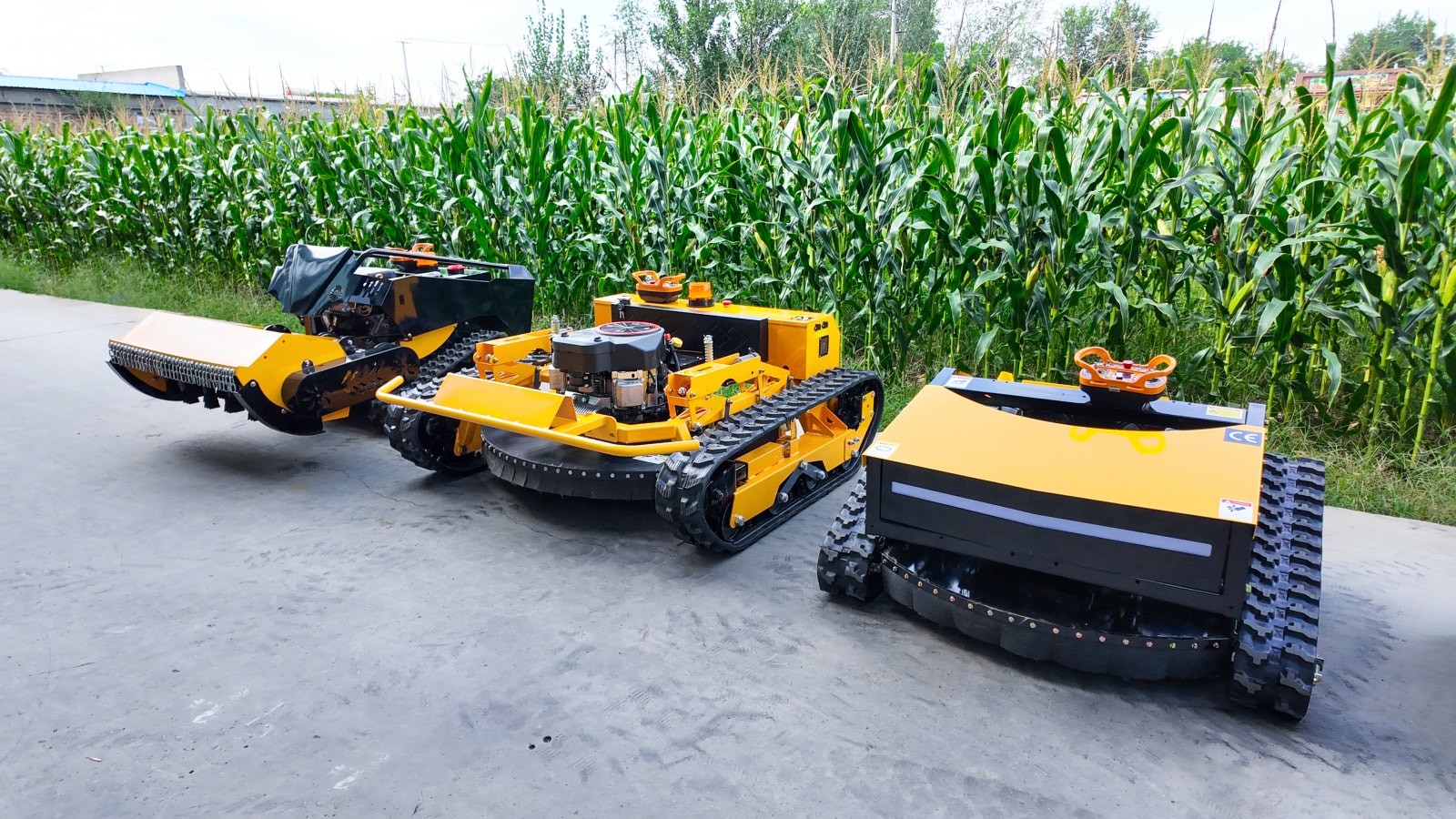
Gone are the days of straining with push mowers on steep slopes or struggling to maneuver ride-ons around tight corners. Remote control (RC) lawn mowers have emerged as the ultimate solution for safe, precise, and effortless lawn care, bridging the gap between manual operation and fully autonomous robots. Unlike robotic mowers that require complex boundary setup or struggle with irregular terrain, RC models put you in direct control from a safe distance—perfect for residential yards, commercial landscapes, golf courses, and agricultural fields alike. In 2026, with advancements in traction, battery life, and smart features, these machines are redefining what’s possible for lawn maintenance. Let’s dive into the干货 (hard-hitting insights) you need to choose, use, and maintain an RC lawn mower like a pro.
1. Why Remote Control Lawn Mowers Beat Push/Ride-On/Robotic Models
The value of RC lawn mowers lies in their unique balance of control, safety, and versatility—here’s how they outperform other options:
• Unrivaled Safety on Hazardous Terrain: Operate from 100–500 meters away, eliminating the risk of slips, falls, or blade injuries on steep slopes (up to 70°), near roads, railways, or water bodies. Their low center of gravity design further reduces tipping, a critical advantage over ride-ons that compress soil and pose risks on inclines.
• Precision Without Compromise: Unlike robotic mowers that rely on pre-programmed paths (and often need rescue when stuck), RC models let you adjust speed, direction, and cutting height in real time. Navigate around trees, flower beds, or obstacles with centimeter-level accuracy—no missed patches or accidental damage to garden features.
• Terrain Adaptability for Every Space: From residential yards with gentle slopes to commercial golf courses, orchards, and municipal parks, RC mowers handle uneven ground, thick grass, and even small brush with ease. Tank track or 4WD designs provide superior traction on mud, gravel, or hilly terrain that robotic mowers struggle with.
• Efficien for All Scales: Residential models cover 800–1200 m² per charge, while commercial-grade units mow up to 2,000 sq.ft per hour—5x faster than standard smart mowers. For landscaping businesses, this means completing more jobs in less time, with professional-quality results.
• No Complex Setup: Skip the boundary wires or RTK station installation required for robotic mowers. Most RC models are ready to use out of the box—just charge, turn on the remote, and start mowing.
2. RC vs. Robotic Lawn Mowers: Which Is Right for You?
Many buyers confuse RC and robotic mowers, but they serve distinct needs. Here’s the critical comparison to avoid buyer’s remorse:
Factor Remote Control Lawn Mowers Robotic Lawn Mowers
Operation Manual control via remote (real-time human guidance) Fully autonomous (pre-programmed schedules/paths)
Terrain Suitability Excels on steep slopes (30°–70°), uneven ground, tight spaces Best for flat, regular-shaped lawns (max 40° slopes)
Setup No wires/mapping—immediate use Requires boundary wire or AI mapping (1–3 hours setup)
Obstacle Handling Human-guided avoidance (no stuck situations) Relies on sensors—may get stuck in depressions/rough terrain
Cost Mid-range ($1,000–$15,000) – more affordable than commercial robots Higher upfront cost ($2,000–$20,000+)
Best For Slopes, complex yards, commercial landscaping, orchards Flat residential lawns, hands-off users
Pro Tip: If you have a sloped yard, irregular shape, or need to mow near hazards, RC is non-negotiable. For flat, low-maintenance lawns, robots offer convenience—but lack the adaptability of RC models.
3. 2026 Must-Have Features: What to Prioritize When Buying
Not all RC lawn mowers are created equal—focus on these features to ensure performance, durability, and safety:
A. Terrain & Traction
• Slope Capacity: Choose based on your needs: Residential (30°–40°), Commercial (50°–70°). Look for 4WD or tank tracks for extreme inclines (e.g., dams, hillsides).
• Obstacle Clearance: 10–15cm vertical clearance to handle curbs, tree roots, or small depressions—critical for avoiding stuck situations.
• Weight Distribution: Low center of gravity (CG) design to prevent tipping on slopes—avoid top-heavy models.
B. Power & Runtime
• Power Source:
◦ Electric (Li-ion): Silent, zero-emission, low maintenance (ideal for residential/noise-restricted areas). Look for 1–2+ hour runtime (18Ah+ batteries) and fast charging (90 mins or less).
◦ Gas/Diesel: High torque (9–13.6 HP) for commercial use—no battery limits, perfect for thick grass/brush on large properties.
◦ Hybrid: Balances eco-friendliness and power (3+ hour runtime) – great for all-weather, heavy-duty use.
• Motor Type: Brushless closed-loop motors for efficiency and longevity (avoids overheating during long sessions).
C. Control System
• Remote Range: 100–200m (residential), 300–500m (commercial) – ensure industrial-grade signal (no interference in large yards).
• Remote Design: Ergonomic grip, one-click emergency stop, variable speed control (1.5–3.5 mph), and IP54+ water/dust resistance (for outdoor use).
• Smart Add-Ons: App connectivity for monitoring, multi-device control (for teams), and speed memory (repetitive paths) – useful for commercial users.
D. Cutting Performance
• Cutting Width: 50–60cm (residential), 60cm+ (commercial) – wider decks = faster mowing. Some models offer 31.5-inch decks for maximum efficiency.
• Cutting Height: 30–150mm adjustable (stepless or gear) to suit lawn grass, pastures, or tall weeds.
• Cutting Modes: Mulch (nutrient-rich grass clippings), side discharge, or bagging – mulching is a must for lawn health.
E. Safety & Durability
• Safety Features: Emergency stop button, obstacle detection sensors, automatic power-off (loss of remote signal), and anti-theft GPS tracking (for high-value models).
• Build Quality: Steel/aluminum frame (no fragile plastic), rust-resistant coating (wet climates), and 16+ rotary blades (for even cutting on uneven ground).
• Weather Resistance: IP54+ rating for the mower and remote – safe to use in rain, dust, or high humidity.
4. Scenario-Based Recommendations (No Brand Bias)
Choose the perfect RC mower configuration for your specific use case:
🌿 Residential Use (Medium Yards, Gentle Slopes)
• Ideal Specs: Electric 4WD | 50–60cm cutting width | 30°–40° slope capacity | 100–200m remote range | 1–2 hour runtime | IP54 rating.
• Why: Silent, eco-friendly, and low maintenance—perfect for suburban yards with noise restrictions. Mow while relaxing on your porch, no physical exertion required.
🏢 Commercial Landscaping (Parks, Campuses, Golf Courses)
• Ideal Specs: Gas/diesel 4WD | 60cm+ cutting width | 50°–70° slope capacity | 300–500m remote range | 8+ hour runtime | mulch/discharge modes | accessory compatibility (sprayers, snow shovels).
• Why: Handles large areas fast, tackles rough terrain, and opens new business opportunities (e.g., slope mowing contracts) that ride-ons can’t service.
🌳 Orchards & Agricultural Fields (Uneven Ground, Narrow Rows)
• Ideal Specs: Tank track design | hybrid power | 15cm obstacle clearance | 40°–50° slope capacity | 2+ hour runtime | low profile (fits under trees).
• Why: Navigates narrow orchard rows, avoids tree roots, and cuts thick grass/pasture without compressing soil.
⛰️ Extreme Terrain (Steep Slopes, Dams, Roadsides)
• Ideal Specs: Tank track 4WD | diesel power (9–13.6 HP) | 60°–70° slope capacity | 300–500m remote range | self-recovery system (deploys robotic arms to free from depressions).
• Why: The ultimate in slope safety and adaptability—no risk to operators, even on near-vertical inclines.
5. Pro Maintenance Tips to Extend Lifespan (Save Money Long-Term)
RC lawn mowers are investments—follow these tips to keep them running for years:
1. Battery Care: For electric models, avoid overcharging (unplug when full) and store batteries at 50% charge during off-seasons. Replace batteries every 3–5 years (Li-ion lifespan).
2. Blade Maintenance: Sharpen blades every 20–30 hours of use (dull blades tear grass, damaging lawns). Replace bent/blunt blades immediately—look for high-carbon steel options for durability.
3. Cleaning Routine: Wipe down the mower and remote after each use to remove grass clippings, mud, and debris. Clear the cutting deck to prevent clogging (critical for wet grass).
4. Seasonal Storage: Store in a dry, covered area. For gas models, drain fuel before winter. For electric models, remove batteries and store separately to avoid cold damage.
5. Regular Inspections: Check wheels/tracks for wear, tighten loose bolts, and test safety features (emergency stop, obstacle detection) monthly. Address issues early to avoid costly repairs.
Final Thoughts: Is a Remote Control Lawn Mower Worth It?
Absolutely—if you value safety, precision, and versatility. For homeowners with sloped or complex yards, it eliminates back pain and risk. For landscaping businesses, it unlocks profitable new services and boosts efficiency. In 2026, with advancements like self-recovery systems and wireless navigation, RC lawn mowers are no longer a “luxury”—they’re a practical solution for modern lawn care.
The key to success is matching the mower’s features to your terrain and needs. Skip the one-size-fits-all robotic models if you have slopes or irregular spaces—opt for an RC mower that puts you in control, without the physical strain. With proper maintenance, it will pay for itself in time saved, lawn health improved, and peace of mind gained.
Happy mowing—from the comfort of your favorite spot!